

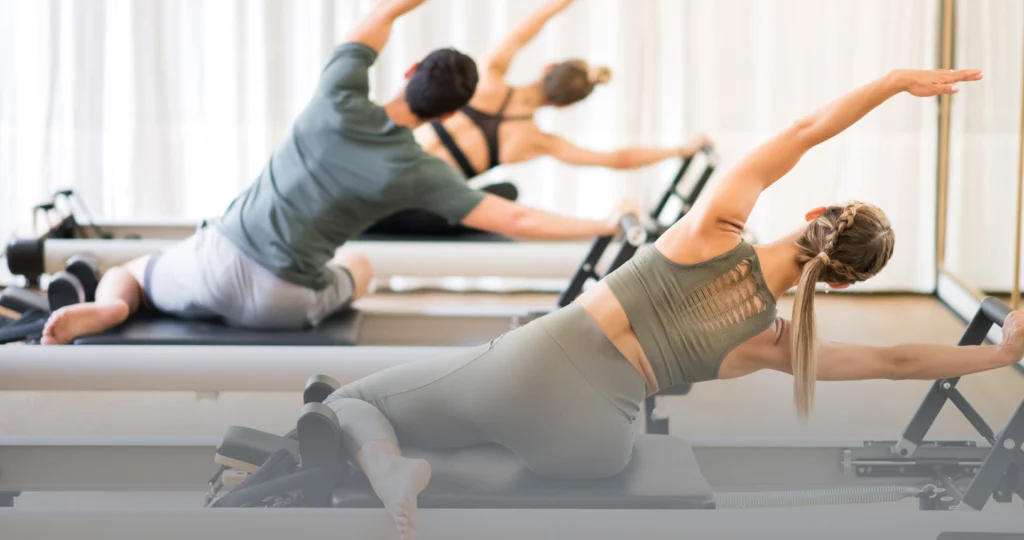
Studies on the machine itself link it to lower back pain scores, better balance in older adults, sharper attention, and bigger athletic gains than mat work.
For those seeking Pilates in NYC, In Touch PT offers guided reformer sessions led by Keith Chan, MPT, CKTP. Clients get these benefits safely, despite common Pilates myths.
I hope you’re enjoying reading this blog post. If you’re dealing with pain, recovering from an injury, or looking for hands-on physical therapy care in NYC, click here to schedule your consultation with our team.
Key Takeaways
- Reformer Pilates builds core strength, improves posture, and sharpens balance through controlled, low-impact resistance on a spring-based machine.
- Machine-specific studies show less low back pain and disability, better balance and lower fall risk in older adults, and better attention in sedentary women.
- Adjustable springs make it workable for beginners, athletes, and people in rehab.
- Compared with mat work, the reformer adds resistance and support, which helps beginners and anyone training around an injury.
- Women may gain pelvic floor support, joint stability, and strength across different life stages.
- The research programs that showed results ran one to three sessions a week for 6 to 10 weeks.
What Is Reformer Pilates?
Reformer Pilates is a form of Pilates done on a machine called a reformer. Joseph Pilates designed it in the early 20th century to add resistance and support to his exercises.
The main parts:
- Carriage: a padded platform that slides back and forth on rails
- Springs: hooks under the carriage that set the resistance, from light to heavy
- Footbar: a bar at one end you push against with your feet or hands
- Straps: loops for your hands or feet that pull against the springs
- Shoulder blocks and headrest: hold you in place and support your neck
You can lie down, sit, kneel, or stand on the carriage. That range of positions lets one machine train your legs, hips, core, back, arms, and shoulders in a single session.
Is Reformer Pilates Good for You?
Yes. Reformer Pilates is good for you when you use proper form and the right spring settings.
It suits a wide range of people:
- Beginners who want support while they learn the movements
- Athletes who want strength and control without extra joint stress
- Older adults working on balance and coordination
- People recovering from injury or managing back or neck pain
- Anyone dealing with balance and gait issues who needs low-impact progressive loading

Because it’s low impact, many physical therapists use it for rehab and injury prevention.
The key question isn’t whether it works. It’s whether you’re doing it correctly and consistently.
What Does Reformer Pilates Do for Your Body?
Reformer Pilates strengthens your muscles against spring resistance while training them to steady a moving surface. The reformer Pilates effect on your body builds gradually, combining muscle endurance, better spinal alignment, increased mobility, and steadier joints.
Here’s what happens during a session:
- Two-way loading. The springs load your muscles as you push the carriage out and again as you control it back in.
- Stabilizer work. The sliding carriage makes the small stabilizing muscles around your spine, hips, and shoulders work continuously.
- Built-in feedback. The straps and footbar show you when your alignment drifts.
- Lighter can be harder. On many core exercises, a lighter spring makes the carriage less stable, so your trunk works harder to control it.
Over time, you build muscle endurance, improve spinal alignment, increase mobility, and stabilize your joints.
Is Reformer Pilates a Good Workout?
Yes. Reformer Pilates is a good workout for strength, muscle endurance, and body control, and it counts as a muscle-strengthening activity under US activity guidelines.
In one study, medical interns who leaned toward a sedentary lifestyle trained on the reformer for nine weeks. They improved on performance tests, raised their HDL (“good”) cholesterol, lowered insulin, and trimmed their waist size.
It isn’t a cardio session. US activity guidelines recommend 150 minutes of moderate aerobic activity a week, plus two days of muscle-strengthening work. Reformer sessions cover the strength part. Add walking, cycling, or swimming to make up the rest.
Is Reformer Pilates Better Than Regular Pilates?
For most goals, yes, reformer Pilates is better than regular mat Pilates for building strength and supporting rehab. The reformer adds adjustable resistance and support that a mat can’t. Mat Pilates still wins on cost and convenience.
The research backs this up:
- Athletes. In a 2025 randomized trial, soccer players did 8 weeks of reformer training. They improved agility, passing accuracy, and single-leg hopping more than players doing mat work.
- Low back pain. In a 2024 study of adults with chronic low back pain, the reformer group reported less pain and disability than a group doing similar exercises on a mat. Read more about how Pilates reduces back pain and what the research shows.
The best choice depends on your goals, budget, and body.
| Factor | Reformer Pilates | Mat Pilates |
|---|---|---|
| Resistance | Adjustable springs, light to heavy | Body weight, plus small props |
| Support | Springs and straps can assist movement, which helps beginners and people training around injuries | Less support; harder to modify around an injury |
| Exercise variety | Lying, seated, kneeling, and standing work on one machine | Fewer variations without equipment |
| Form feedback | Footbar, shoulder blocks, and springs show you when alignment slips | Relies on your own awareness or an instructor's cues |
| Research edge | Beat mat work on agility and passing in soccer players and on back pain scores in recent trials | Most Pilates research uses mat work, so its overall evidence base is larger |
| Cost | Higher. Clinical, rehab-based sessions at In Touch NYC are $120 per session | Low. Free videos or lower-cost group classes |
| Space | Needs a studio, clinic, or home machine | Just a mat, so it travels well |
| Best for | Strength, rehab, and athletes who want more load and better form feedback | Budget-friendly training, travel, and practice between sessions |
Benefits of Reformer Pilates for Women
Reformer Pilates benefits for women include stronger core support, better posture, lean muscle tone, and steadier joints, all with low impact.
Key benefits include:
- Stronger core and pelvic floor support
- Better posture and less back discomfort
- Lean muscle tone without heavy joint stress
- Better balance and stability
- Resistance work that supports bone health, alongside weight-bearing exercise
- More flexibility and controlled movement
- Less stress through focused breathing
The machine fits different life stages. Pregnant or postpartum women can benefit from guided sessions; see our physical therapy guide for pregnant women to learn what to expect at each stage.
Leaking, pelvic pressure, or discomfort during exercise can signal that your core work needs adjustment. In that case, pair your training with pelvic floor therapy.
What Are the Benefits of Reformer Pilates?
If you are wondering what reformer Pilates is good for, it strengthens your core, improves posture, builds coordination, and increases body control while keeping joint stress low.
Reformer Pilates research is newer than mat work research, but studies on the machine itself are growing. Where machine-specific studies exist, we cite them below. Where they don’t, we point to broader Pilates research and say so.
The Pilates reformer machine benefits come from its moving carriage and resistance system, which activate stabilizing muscles and reinforce proper form.

| Benefit | Who was studied | Program | What changed | Source |
|---|---|---|---|---|
| Low back pain | 30 adults with chronic low back pain | 8 weeks of 50-minute sessions | Less pain and disability and better quality of life than the mat group | Jeon et al., 2024 |
| Balance and falls | 55 adults, average age 77 | One 1-hour class a week for 10 weeks | Better balance, mobility, and balance confidence; lower fall risk | Roller et al., 2018 |
| Attention | 44 sedentary women, ages 24 to 50 | 45 minutes, twice a week for 6 weeks | Better Stroop test scores than women who did not exercise | Ozeren et al., 2024 |
| Athletic performance | 30 amateur male soccer players | 3 sessions a week for 8 weeks | Bigger gains in agility, passing, and single-leg hops than mat training | Yilmaz et al., 2025 |
| Metabolic health | 22 medical interns | 9 weeks of reformer training | Higher HDL cholesterol, lower insulin, and a smaller waist | Yilmaz et al., 2022 |
Note on study size: the attention and balance trials each had under 60 participants. The soccer and back pain studies used controlled comparisons, which makes those findings more reliable. Reformer-specific research is still growing, so these results should be read as promising, not final.
Below, we explain each key benefit in more detail.
Reformer Pilates improves core strength.
The core is your trunk and all of its associated muscles. It drives posture, stability, and movement. A weak core often feeds chronic discomfort in the head, neck, back, and shoulders.
The reformer trains the core in a way a mat can’t. A 2024 study found that adjusting spring resistance changes core muscle activity because a lighter spring creates a less stable carriage for your trunk to control.
Broader studies on postpartum women and people with chronic back pain found the same pattern: stronger muscles and less core-related pain.
Reformer Pilates improves posture.
Poor posture leads to many problems, from head and neck discomfort to chronic muscle tension. Building core strength makes it easier to hold good alignment.
The reformer adds feedback that a mat doesn’t. The footbar, headrest, and shoulder blocks set your starting position, and the springs show you when you lose control of the carriage. Seated rowing and back extension on the long box strengthen the upper back muscles that desk work tends to weaken. To reinforce these gains at home, posture-improvement exercises can complement your sessions.
The result is better awareness of your alignment when you sit, stand, walk, bend, or lift in everyday life.
Reformer Pilates improves balance.
Balance keeps you steady when you walk, turn, or react to a slip. It’s central to daily activity at any age.
Among older adults, Pilates has been shown to help prevent falls by building core strength and alignment.
Machine-specific research points the same way. In a 2018 randomized trial, adults with an average age of 77 attended a one-hour reformer class once a week for 10 weeks. They improved static and dynamic balance, functional mobility, and balance confidence, and their fall risk dropped.
If balance is already a concern, a structured fall prevention program can pair reformer work with gait and strength training.
Reformer Pilates may improve immune function.
Pilates strengthens and aligns muscles and gets your blood moving. Better circulation may support your immune system.
A study of older adults found improved immune markers in older men after Pilates training.
The evidence is still early and comes mostly from older groups. Treat this as a possible benefit, not a proven one.
Reformer Pilates reduces pain.
Discomfort often comes from weak, tight, or poorly aligned muscles. Weak core muscles or poor posture can lead to chronic pain in the head, neck, shoulders, and back.
By addressing those underlying causes, reformer training can relieve recurring discomfort.
- Low back pain. A 2024 study found that 8 weeks of lumbar stabilization exercises on the reformer reduced pain and disability more than the same program done on a mat. Our low back pain treatment page covers what to expect from a clinical approach.
- Menstrual pain. Studies also show that Pilates can reduce menstrual pain and discomfort.
If you’re dealing with ongoing back pain or sciatica, get evaluated before you choose spring settings on your own.
Reformer Pilates improves flexibility.
Flexible muscles make it easier to stretch, move, reach, and function without injury.
Compared with simple stretching exercises, Pilates improves the muscles’ ability to lengthen.
The reformer takes this further. Springs let muscles lengthen while working against resistance, and straps support your legs through a greater range than you could reach on your own. In the 2025 soccer trial, only the reformer group improved its sit-and-reach flexibility score; the mat group did not.
Reformer Pilates reduces injuries.
Muscles that are out of balance, either too weak or too tight, are more prone to injury. Addressing that imbalance is one of the main reasons practitioners use reformer work in rehab and athletic training.
Reformer training reaches the deep stabilizers that traditional workouts often skip. Elite soccer medical teams include machine-based hip and core stability work in their hamstring injury prevention programs, alongside strength and sprint training. You can read more about how this connects to broader sports injury prevention.
Direct evidence that reformer training alone prevents injuries remains limited. It works best as part of a broader plan.
Athletes returning from injury can add reformer work to sports rehabilitation once a physical therapist clears them to progress.
Reformer Pilates improves mood.
Like any exercise, reformer work releases endorphins, chemicals that lift your mood and sense of well-being.
A 2018 meta-analysis of controlled trials found that Pilates improved mental health outcomes across several measures:
- Lower anxiety
- Fewer depressive symptoms
- Less fatigue
- More energy
The trials were small, so more research is needed. That said, you don’t need to experience depression or anxiety to notice the difference. Regular sessions help most people feel calmer and more grounded day to day.
Reformer Pilates improves cognitive functioning.
Mood isn’t the only mental benefit of reformer training. It may also sharpen how your brain processes information.
In a 2024 randomized trial, 44 sedentary women ages 24 to 50 did 45-minute reformer sessions twice a week for 6 weeks. Compared with women who didn’t exercise, they scored better on the Stroop test, which measures attention and how quickly you process competing information.
Reformer Pilates improves motivation and focus.
These cognitive gains also seem to carry over into motivation and focus, two qualities that shape how you perform and learn outside the gym.
One study of students found that those who did Pilates reported a longer attention span and stronger motivation to complete their coursework.
Common Reformer Pilates Exercises
Understanding what you’ll actually do on the machine helps you know what to expect. Here are four exercises you’ll see in most beginner and rehab sessions:
- Footwork. Lying on your back with feet on the footbar, you press the carriage away and return it in a controlled movement. It warms up the hips, knees, and ankles and teaches clean leg tracking.
- Leg circles. With feet in the straps, you make smooth circular motions with your legs. This builds hip mobility and core stability.
- Arm springs. Sit or lie on the carriage and pull the straps through various arm movements to build shoulder stability and upper-body strength.
- Short spine massage. Lying on your back with feet in straps, you roll your spine up and down the carriage. This builds spinal flexibility and core control while decompressing the lumbar vertebrae.
Spring settings change for each exercise. Your instructor or therapist sets the resistance to match your strength and session goals.

Who Should Be Careful With Reformer Pilates?
Reformer Pilates is safe for most people. A few situations call for changes or a doctor’s clearance first. When injuries do happen, poor form and incorrect spring settings are common causes.
Talk to your doctor or a physical therapist before you start if you:
- Are pregnant. Many exercises still work, but positions and intensity often need to change as pregnancy progresses. Our physical therapy guide for pregnant women covers safe movement at each trimester.
- Have osteoporosis. Some loaded forward rounding of the spine, which appears in certain ab series, may need modification.
- Recently had surgery. Follow your surgeon’s timeline, then build up with post-surgical recovery exercises before moving to harder carriage work.
- Have a back pain flare with leg numbness or weakness. Get evaluated before loading your spine. Our team handles physical therapy for chronic back pain and can guide the right progression.
- Have a recent joint injury, such as a sprained ankle or a hip or knee problem.
A licensed physical therapist can choose spring settings and exercise modifications that fit your history.
How Often Should You Do Reformer Pilates?
For most people, 2 to 3 sessions a week works well. What are the benefits of using a Pilates reformer regularly? They build over weeks, not days, which is why consistency matters more than intensity early on. The benefits of using a Pilates reformer regularly accumulate over weeks, not days. The benefits of using a Pilates reformer regularly accumulate over weeks, not days.
The studies in this article saw meaningful changes within 6 to 10 weeks:
- Attention: twice a week for 6 weeks
- Low back pain: 8 weeks of stabilization training
- Athletic performance: 3 times a week for 8 weeks
- Balance in older adults: once a week for 10 weeks
At our clinic, most sessions last 30-45 minutes. If you’re in rehab, your therapist sets the frequency based on your goals and how your body is responding.
Reformer Pilates FAQs
Will Pilates reformer tone my body?
Yes, it can. A Pilates reformer tones your body through spring resistance that moves your muscles through a full range of motion, building strength and endurance and creating a firmer appearance over time.
Visible change also depends on body fat, so what you eat and how much aerobic activity you get matters too. In the nine-week study of medical interns, waist size dropped after reformer training, even without a specific diet intervention.
Can beginners do reformer Pilates?
Yes. The springs can assist your movements and still challenge you, so the machine is often easier to start on than people expect. Our reformer Pilates for beginners guide walks through what your first few sessions will look like and what to focus on.
Start with guided sessions to learn how to set up the equipment and safely get on and off the moving carriage.
Can you do reformer Pilates at home?
You can, if you have the space and budget for a home machine. Start with a qualified instructor to learn the basics and build good habits before training alone. Hands-on physical therapy guidance alongside your reformer practice can help you progress faster and stay injury-free.
At In Touch NYC, Keith Chan, MPT, CKTP, a New York State licensed physical therapist with over 10 years of clinical experience and 17 years as a certified personal trainer, guides our Pilates sessions. We offer Pilates as part of our tailored treatment programs. If you’re ready to start, contact us today.