
Hip Pain Treatment Midtown: What Physical Therapy Involves
In Touch NYC provides hip pain treatment for Midtown residents and commuters and is located at 162 W 56th St, Suite 302, near Carnegie Hall. This is a real, staffed office, not a service-area listing.
A licensed physical therapist leads your care from the first evaluation through an exercise-based plan. Keith Chan, MPT, CKTP, a New York State licensed physical therapist with a Master’s in physical therapy from CUNY Hunter College and a Graston Technique provider, is part of the Midtown team.
Hip pain often starts on the outside of the joint, along the outer buttock or upper thigh. It can appear at rest, while walking, or during exercise. Patients also notice stiffness, a groin pinch, or a catch when they move.
If you are dealing with hip pain, call our offices to schedule a physical therapy consultation.
Request An Appointment
What Are the Common Causes of Hip Pain?
Most hip pain comes from wear, overuse, injury, or irritation of the tissue around the joint. The hip is durable, but years of use make chronic pain more likely. A slip and fall can fracture the bones, and arthritis breaks down the cartilage that cushions the joint. For symptoms that start in the spine, see our Back Pain & Sciatica page.
Other common causes include:
- Bursitis
- Tendinitis
- Hip fractures
- Work injuries
- Tendon or muscle strain
- Osteonecrosis
Hip Strain From a Midtown Commute
Long seated commutes keep the hip flexors shortened for extended periods. Standing on platforms and absorbing sudden train stops ask the hip stabilizers to work in short, repeated bursts. Over months, that combination can leave the front of the hip tight and the muscles along the side of the joint underworked. Patients who walk and climb stairs through Midtown often notice it first as soreness on the outside of the hip.
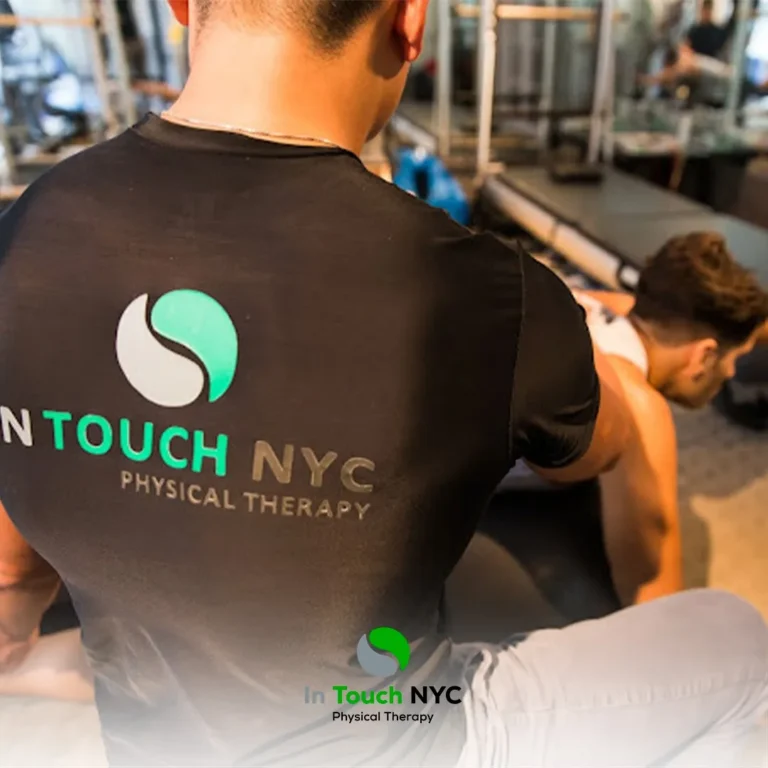

Physical Therapy for Hip Injuries in NY: Conditions We Treat
Hip Conditions Treated at Our Midtown Office
In Touch NYC treats hip problems caused by overuse, falls, surgery, and arthritis. Care combines hands-on work, graded exercise, and a home program based on what triggers your symptoms.
Hip Impingement
Femoroacetabular impingement happens when the ball and socket pinch during deep bending or twisting. Over time, that contact can irritate the labrum, the ring of cartilage around the socket. Most patients describe a deep groin ache that shows up when sitting for long stretches or squatting. Treatment builds strength through the hip and changes the positions that trigger symptoms.
Hip Flexor Pain
Tightness, soreness, or strain at the front of the hip often follows long periods of sitting followed by running or cycling. The tissue is loaded hard after hours in a shortened position. Treatment uses soft tissue work, gradual strengthening, and regular breaks from sitting through the day.
Outer Hip Pain and Bursitis
Soreness on the outside of the hip that flares when lying on that side or climbing stairs usually involves the gluteal tendons or the bursa. The main treatment is strengthening the muscles along the side of the joint, paired with changes to sleeping and standing habits.
IT Band Pain at the Outer Hip
The IT band is a thick band of connective tissue running along the outer thigh. IT band syndrome is best known for pain on the outside of the leg, but it can also produce pain across the bony point of the outer hip. Treatment focuses on hip strength, training load, and a graded return to running or cycling through our Sports Rehabilitation program.
Hip Osteoarthritis
Hip arthritis typically brings morning stiffness, groin or thigh pain, and difficulty putting on shoes and socks. Current physical therapy guidelines name exercise as the primary treatment. Add manual therapy when the joint has lost mobility.
Hip Rehabilitation After Fracture or Surgery
After fracture repair or hip replacement, rehabilitation follows the surgeon’s protocol. Sessions progress from walking and safe transfers to stairs, then to balance and daily routines.
Knee Pain Treatment in Midtown
Hip and knee problems often go hand in hand. Weakness in the hip abductors changes how the thigh bone tracks during walking, running, and stair climbing, which can load the knee in ways that produce pain over time. IT band irritation is a clear example, since the same tissue can cause symptoms at the outer hip and at the outer knee. We assess patients seen for hip pain at the knee when the pattern suggests it, and vice versa.
For detailed information on knee conditions, including runner’s knee, patellar tendinopathy, meniscus tears, and recovery after knee surgery, see Knee Pain Relief Midtown.
Hip Pain Treatment: How Physical Therapy Helps
At our Midtown office, we use physical therapy to reduce pain, restore range of motion, and rebuild strength without prescription medication. It’s non-invasive, so it suits patients of all ages. A 2025 clinical practice guideline published in JOSPT supports exercise and manual therapy for this purpose.
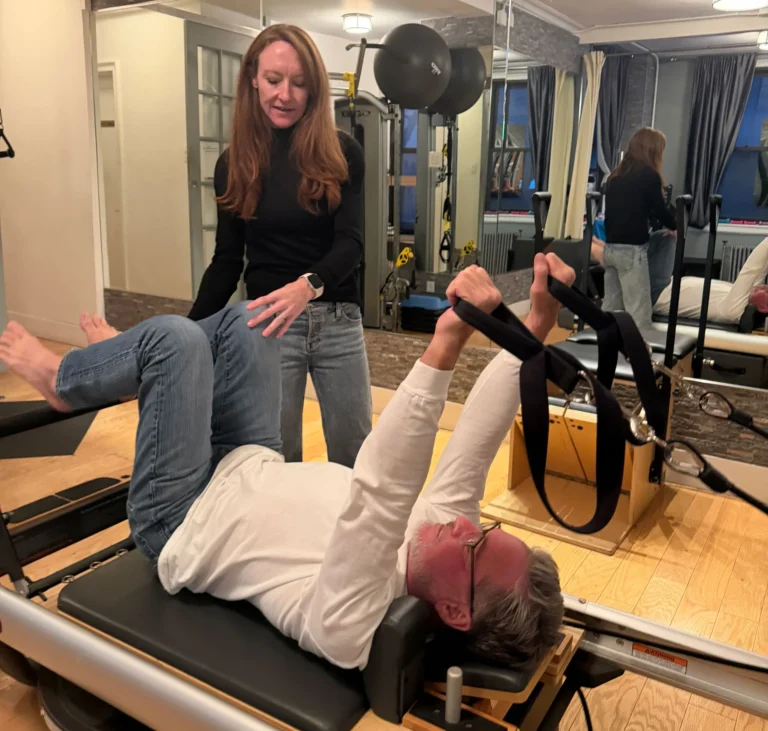
Treatment combines hands-on work with graded exercise. Graston Technique uses instrument-assisted soft tissue work on restricted tissue around the hip. Pilates-based rehabilitation builds core and hip control, progressing as strength returns. INDIBA radiofrequency is available at the Midtown office.
Your plan is built around your goals and targets the cause of your symptoms, not only the symptoms. It may also include at-home exercises and passive treatments such as heat, ice, or electrical stimulation to calm a flare-up.
Fractures and severe injuries need surgical care first. People who have surgery usually still need rehab afterward to recover strength and movement.


98%
Based on 50+ reviews
Who Treats Hip Pain at Our Midtown Office
Hip patients at the Midtown office are seen by Keith Chan, MPT, CKTP or Beth Simoes, MPT, CPI. Both are New York State licensed physical therapists with Master’s degrees in physical therapy from CUNY Hunter College. Keith is a Graston Technique provider, and Beth leads the Pilates-based rehabilitation at this location.
Posted on Google
 Monica Alonso
Trustindex verifies that the original source of the review is Google.
This practice is a breath of fresh air. From the front desk to the therapists, everyone is professional and welcoming. I’ve seen Keith for a sports injury and Beth for some chronic pain issues, and both are incredibly skilled. The one-on-one sessions are 30-50 minutes of undivided attention, which is so much better than other clinics I’ve tried. They accept a wide range of insurance plans, including for Pilates-based PT, which is a huge plus. I recommend them to everyone.Posted on Google Maria V.Keith Chan is a master of his craft. As someone who is very active, I needed a PT who understood that I wanted to get back to my workouts, not just be pain-free. Keith’s background as a personal trainer and his Graston certification made him the perfect fit. He created a plan that was both challenging and safe. Their Midtown clinic is clean, modern, and runs on time. I can’t recommend him enough for anyone looking to recover from an injury and get back to what they love.Posted on Google
 Zee D.My knee was in such bad shape when I first came to In Touch. I was practically immobile and somehow pushing myself through the day, but in Keith's hands I have gone through a remarkable transformation. His care and attention, coupled with an intense physical regiment has benefited me greatly. I am glad a good friend recommended him!Posted on Google
 Ava ShabahangThis place is great. Keith has reduced my pain so much, I don’t know what I did before him. It’s small and intimate and I’ve consistently received great care. Heather is also extremely helpful when it comes to booking and changing appointments. I would 100% recommend this practice.Posted on Google
 Jay Yang10/10 just finished day 1 and 10 minutes into the session I knew I came to the right place. Looking forward to working together furtherPosted on Google
 Susan GoldbergKeith understands the body better than other physical therapists I’ve been to. I didn’t think my neck and shoulders would ever get back to normal because I hurt for so long. Keith changed that. Never had to take advil to ease the tightness again. Highly recommend the practice.Posted on Google
 Dana SolaI’ve struggled with migraines and neck tension for years, and Beth at In Touch NYC PT has been a game-changer. She has a deep understanding of the body and doesn’t just treat the symptom; she gets to the root cause. Her Pilates-based approach was new to me, but it’s helped my posture and core strength so much. I’m finally seeing real, lasting results.Posted on Google
 Alma CesarI cannot say enough good things about Beth and the team at In Touch NYC. After having my second baby, I was dealing with pelvic floor issues that I thought I just had to live with. Beth specializes in this area and made me feel comfortable from the very first appointment. She is patient, understanding, and incredibly skilled. Their Midtown location is calm and welcoming, which makes a huge difference when you’re dealing with sensitive health issues. I finally feel like myself again. If you’re a mom looking for a pelvic floor PT in NYC, this is the place!!Posted on Google
 Camila GonzalezI’ve been to a few physical therapy clinics in NYC, but In Touch Physical Therapy is on another level. Keith Chan is incredibly knowledgeable and actually takes the time to listen. I went to their Midtown location for a lingering shoulder issue, and Keith built a plan that finally got me back to full strength. I always left feeling heard and confident in my recovery. Highly recommend if you want real one-on-one care.Posted on Google
 Cristina IncisaKeith is exceptional. Professional, knowledgeable, and incredibly attentive. I always feel I’m in the best hands and couldn’t recommend him more highly.
What to Expect at Your First Visit
Your first session is an evaluation. Most sessions run 30 to 45 minutes, and you can request one-on-one care. Bring any imaging reports or post-op protocols you have. The evaluation covers:
- When symptoms started, what makes them worse, and whether a fall or activity change came first
- Range of motion, strength, balance, and how you walk, squat, and step up
- A check of the lower back and pelvis, since both can refer symptoms into the hip and groin
- A clear explanation of the findings, your plan, and a starter home program
If anything points to a problem outside the scope of physical therapy, such as a suspected fracture, your therapist will refer you to a physician.
Your care includes:

Licensed Physical Therapist Leads Your Care

Full evaluation and goal setting

30–45-minute sessions, One-on-One Available on Request
Individualized treatment plan with phased rehabilitation programs
Evidence-Based Treatment
Progress tracking and regular reassessment

5-STAR GOOGLE RATING
We are proud to have a 5-star Google rating! This demonstrates our commitment to excellent service and hopefully builds trust with new customers!

Over 50 5-star google reviews
We are grateful for our more than 50 5-star Google reviews! We strive to continue delivering 5-star service at all of our locations!
How Long Hip Recovery Usually Takes
Recovery time depends on which tissue is involved, how long symptoms have been present, and how consistently the home program gets done. Published research gives useful ranges, though individual recovery varies and no timeline is a promise. The figures below come from clinical trials and published protocols, not from our own patient records.
Outer Hip Pain and Gluteal Tendinopathy
Most lateral hip pain involves the gluteal tendons rather than the bursa. Research has found trochanteric bursitis present in fewer than 20% of people with outer hip pain. In an Australian randomized trial, 14 sessions of education and exercise delivered over 8 weeks produced better pain and function outcomes than a corticosteroid injection, and the difference held at 52 weeks. Meaningful change often takes 6 to 8 weeks to become noticeable.
Hip Impingement Without Surgery
Published protocols vary, and the duration is not settled. A UK physiotherapy network review found treatment described as 6 to 10 sessions over 12 to 24 weeks, and noted that no evidence identifies an optimum duration. One non-operative protocol recommends at least 12 weeks of rehabilitation with a minimum of 6 appointments during that period.
Hip Impingement After Arthroscopy
Among published studies that report an estimated duration, 3 to 4 months is the most commonly cited time before return to sport. One surgical protocol describes gradual resumption of pain-free activity over a 3 to 6 month period, with progress running faster or slower by individual, and some patients continuing to improve for up to a year after surgery.
Physical Therapy Prices for Hip Pain
| Service | Common Hip Uses | Self-Pay Rate |
|---|---|---|
| Physical Therapy, Sports Rehabilitation, Pilates (Clinical / Rehab-based), Fall Prevention | Arthritis, bursitis, tendon pain, impingement, IT band syndrome, post-surgical rehab, core and hip control, balance after a hip fracture or replacement | $120 per session |
| Pelvic Floor Therapy | Hip, groin, or pelvic pain linked to the pelvic floor | $180 per session |
INSURANCE ACCEPTED
We work with most major insurance providers. Review the list below to see if your plan qualifies for physical therapy coverage.
Hip Pain Questions
Is My Hip Pain Coming From My Lower Back?
It can. Groin and buttock symptoms may originate in the hip joint, the pelvis, or the lower back, so the evaluation checks all three. Sacroiliac joint dysfunction is one common source.
Do I Need a Referral to Start Physical Therapy in New York?
Often not. Under New York’s direct access physical therapy rules, a licensed physical therapist can treat you without a referral for up to 10 visits or 30 days, whichever comes first. Some insurance plans still require a referral for coverage.
How Many Visits Will I Need?
The number depends on the condition, how long symptoms have lasted, and your goals. The therapist regularly reassesses progress and adjusts the plan as strength and mobility improve. Published ranges for common hip conditions are in the recovery timelines section above.
When Should I See a Doctor First?
Seek medical care promptly if you cannot bear weight after a fall, the leg looks deformed, or the joint is hot and swollen with a fever. Night pain that does not ease with rest, or numbness that spreads, also needs a doctor’s evaluation.
How Do I Get to Your Midtown Office?
The office is at 162 W 56th St, Suite 302, near Carnegie Hall. The 57th St-7th Ave station on the N, Q, R, and W lines is about a two-minute walk. The F train and the A, B, C, D, and 1 lines are also nearby.
Is There Parking Near the Office?
There is no on-site parking. Several garages operate within a few blocks of 162 W 56th St.
What Are Your Office Hours?
The Midtown office is open Monday, Wednesday, and Friday from 8:00 AM to 6:00 PM, and Tuesday and Thursday from 8:45 AM to 3:00 PM. The 8:00 AM openings work for appointments before the workday starts.
Who Will I See at My Appointment?
Hip patients are seen by Keith Chan, MPT, CKTP, or Beth Simoes, MPT, CPI. Both are New York State-licensed physical therapists.
Schedule a Hip Pain Evaluation in Midtown
atients travel to this office from Midtown East, Murray Hill, and the Grand Central area. The Midtown office is open Monday, Wednesday, and Friday from 8:00 AM to 6:00 PM, and Tuesday and Thursday from 8:45 AM to 3:00 PM. The 8:00 AM openings work well for patients who want an appointment before the workday starts.
Call (212) 288-2988 to check the next available evaluation, or use the appointment form on this page. The office is at 162 W 56th St, Suite 302, near Carnegie Hall.